Resale Vs Thrift In Austin: What Really Counts As A Resale Shop?
What Really Counts as a Resale Shop? (And How Austin Thrift Stores Fit In)
The Short Answer: Nope. Upfront Buying Is Not Required
A resale shop does not need to purchase inventory upfront to legitimately call itself a resale business. What matters is what is being sold, not how it was acquired.
At its core, a resale shop sells secondhand goods to consumers. Those items can come from:
- Consignment (selling items on behalf of someone else for a commission)
- Donations (common with thrift stores)
- Direct purchases (buying items outright from individuals or estates)
- Trades, services, or partnerships (hello, junk removal + resale magic ✨)
If the item has had a previous life and is being resold legally, it qualifies.
Consignment, Donations, and Buying: What’s the Difference?
Consignment-based resale shops sell items for owners and split the profit after the item sells. No sale, no payout. This model is popular for furniture, vintage goods, and higher-end items in Austin. We offer these services by drop off, which has a waitlist, or skip the wait and have us haul the stuff for you. You also have the choice to provide us with a spreadsheet and pricing, or leave it to our team.
Liquidations
Similar to consignment, but sometimes stores will buy items from someone, most of the time businesses, and then sell them to make a higher return. Our liquidation process is similar to consignment, but usually involves higher-end items from businesses. This usually comes with clearout services to get items out quicker and provide a return later.
Thrift Stores
Thrift stores typically rely on donations. Items are given freely, then resold, often at lower prices and sometimes to support a mission or nonprofit. Austin has a huge thrift culture, from local favorites to national chains. Our store takes donations based on the mission to recycle and find homes for unwanted items.
Traditional Resale Stores
Some resale shops purchase inventory upfront, especially when sourcing from estate cleanouts, downsizing projects, or curated collections. Others get the items from junk removal services.
All models fall under the umbrella of resale.
Resale vs Thrift Stores in Austin, TX
Which Term Is Searched More: “Resale Shop” or “Thrift Shop”?
When it comes to online searches (including right here in Austin), “thrift shop” is searched more frequently than “resale shop.” It’s a more familiar, mainstream term, thanks to decades of use, big-name thrift chains, and even pop culture.
That said, “resale shop” tends to attract higher-intent shoppers. People searching for resale are often looking for curated items, furniture, vintage pieces, or quality secondhand goods, not just bargain bins.
Smart Austin businesses (like us 😉) often use both terms strategically to meet people where they are:
- “Thrift shop” for broader discovery and local search volume
- “Resale shop” for quality-focused, intentional buyers
SEO translation: using both helps you win twice. Especially since we resell all sorts of items for various reasons.
Here’s where it gets fun. In Austin, resale and thrift often blur together, and that’s a good thing.
- Resale shops tend to be more curated
- Thrift stores are often volume-driven and donation-based
- Both keep usable items out of landfills
- Both support the local circular economy
From South Congress vintage vibes to East Austin thrift gems, secondhand shopping is practically a sport here.
Do Thrift Stores Have to Be Nonprofits?
This is one of the biggest myths in secondhand retail, so let’s bust it.
No, thrift stores do not have to be nonprofits.
While many well-known thrift stores operate as nonprofits or support charitable missions, for-profit thrift stores are completely legal and common. The defining factor isn’t tax status, it’s how the business is structured and marketed.
- Nonprofit thrift stores: Often donation-based and support a cause.
- For-profit thrift stores: Can accept donations or acquire inventory through other means and sell items as a business. (This is us.)
Both models exist in Austin and across Texas.
Is It Legal to Resell Donated or Consigned Items?
Yes, as long as the items were obtained legally.
Thanks to the First-Sale Doctrine, once an item is legally owned, it can generally be resold without needing permission from the original manufacturer. That’s the legal backbone of resale shops, thrift stores, and vintage markets everywhere.
Why This Matters (Especially in Austin)
Austin is growing fast, but so is the waste. Resale and thrift stores:
- Reduce landfill overflow
- Extend the life of furniture and household goods
- Make affordable items accessible to more people
- Support local jobs and small businesses
- Are tariff free
At IREP Resale, we see firsthand how items rescued from cleanouts and junk removal jobs can become someone else’s favorite find. Many of our best pieces come directly from our Austin junk removal services and full-scale estate cleanouts in Austin, where usable furniture and home goods deserve a second life instead of a landfill.
Austin Neighborhoods Where Resale and Thrift Shine
Resale culture is woven into neighborhoods all across Austin, including:
- South Congress (SoCo) – vintage lovers, this is your runway
- East Austin – eclectic, artsy, and full of hidden thrift gems
- South Lamar – curated resale meets laid-back shopping
- North Loop & Hyde Park – retro, record stores, and classic thrift vibes
- Round Rock & Pflugerville – growing resale scenes with serious value finds
No matter where you shop, buying secondhand in Austin keeps dollars local and items circulating.
Why IREP Is Different
Austin has no shortage of thrift stores and resale shops, but IREP operates a little differently.
We don’t just wait for inventory to walk through the door.
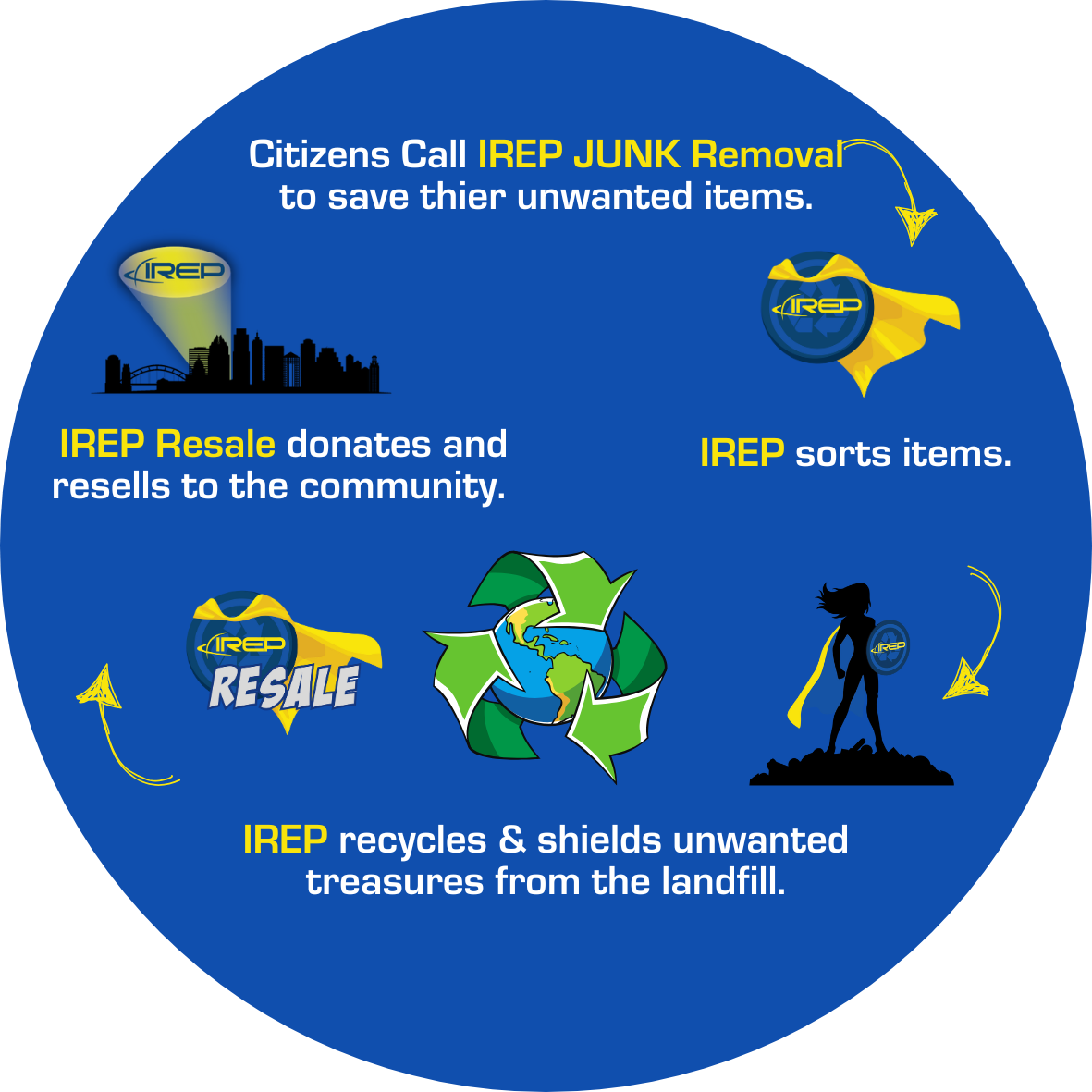
Through our junk removal services and estate cleanouts across Austin, we actively recover high-quality furniture, home goods, and unique pieces that would otherwise end up in a landfill. That means:
- Better furniture with real-life stories
- A good ending for families with attachments to items
- Constantly rotating inventory
- Sustainable sourcing at scale
- A true circular economy model (removal → rescue → resale)
When you shop with IREP, you’re not just buying secondhand, you’re participating in a smarter system.
Need to clear out space before you shop?
Schedule an Austin junk removal or estate cleanout today, and let’s give your items a second life.
Bottom Line: If You’re Reselling, You’re a Resale Shop
Whether inventory comes from buying, consignment, donation, or partnerships, if you’re selling secondhand items for profit, you’re operating a resale business.
And in Austin, TX, that’s not just normal—it’s celebrated.
So next time you’re thrifting, consigning, or shopping resale, know this: you’re part of a smarter, more sustainable way to shop.
And honestly? That’s pretty Austin of you.
FAQ: Resale Shops, Thrift Stores, and Consignment in Austin
Is a thrift store the same as a resale shop?
Not exactly. Thrift stores usually rely on donations, while resale shops may use consignment, direct buying, or donations. Both sell secondhand items, and both play a big role in sustainability.
Can resale shops sell items from junk removal or estate cleanouts?
Absolutely. As long as items are legally obtained, resale shops can sell goods recovered from junk removal services and estate cleanouts. This is one of the most eco-friendly sourcing methods available.
Is resale shopping popular in Austin, TX?
Very. Austin’s culture strongly supports reuse, upcycling, and sustainability. From South Congress to East Austin, resale and thrift shopping are part of everyday life.
Why buy resale instead of new?
You save money, reduce waste, support local businesses, and often find higher-quality or unique items. Plus, resale keeps usable goods out of Austin landfills—win-win-win. You even have a higher chance of finding a really expensive, practically brand-new item at a very low price. If you are a DIYer, you can turn these items into something much better and cooler, and get a significant return if you turn around and sell them on your own.
Does a resale shop need a special license in Austin?
Requirements vary by business model, but most resale shops operate under standard retail licensing. Always check local and Texas state regulations to stay compliant.
Looking for quality secondhand furniture, home goods, or unique resale finds in Austin? Check out IREPResale.com or stop by the store to see even more of what we’ve saved from the landfill lately. Learn about our junk removal services to let us help save your items. ♻️